AI-generated illustration — not a retailer product photo.
Choosing practice management software is less about finding a universal winner and more about matching a platform to the clinic you run. For a solo or smaller practitioner-led practice, Cliniko is a sensible starting point; Semble merits attention where multidisciplinary care and connected workflows matter; Pabau belongs on the list for larger private-clinic operations; and WriteUpp is a candidate for general healthcare workflows.
The useful next step is to compare each option against real patient, clinical, billing and migration scenarios—not just a feature checklist.
Verdict: the right choice depends on clinic complexity
AI-generated illustration — not a retailer product photo.

There is no single best platform for every UK private clinic. The shortlist should start with the operating model: how many practitioners and locations you manage, whether care involves several disciplines, how much coordination happens between appointments, and how ready the team is for migration.
Cliniko is the clearest initial fit for solo practitioners and smaller practices that value a relatively simple starting point. Semble is more compelling when the clinic needs an integrated EHR, scheduling, telehealth, payments, data and workflow-connection capabilities across a broader care model. Pabau is positioned in the independent shortlist as a fuller operations-suite option for larger private clinics, while WriteUpp is presented as a general-healthcare option for solo to mid-size clinics.
Treat these as starting hypotheses for demos, not a ranked verdict. Confirm your own clinical, commercial, data-protection and implementation requirements with each supplier before committing.
What practice management software needs to solve
AI-generated illustration — not a retailer product photo.
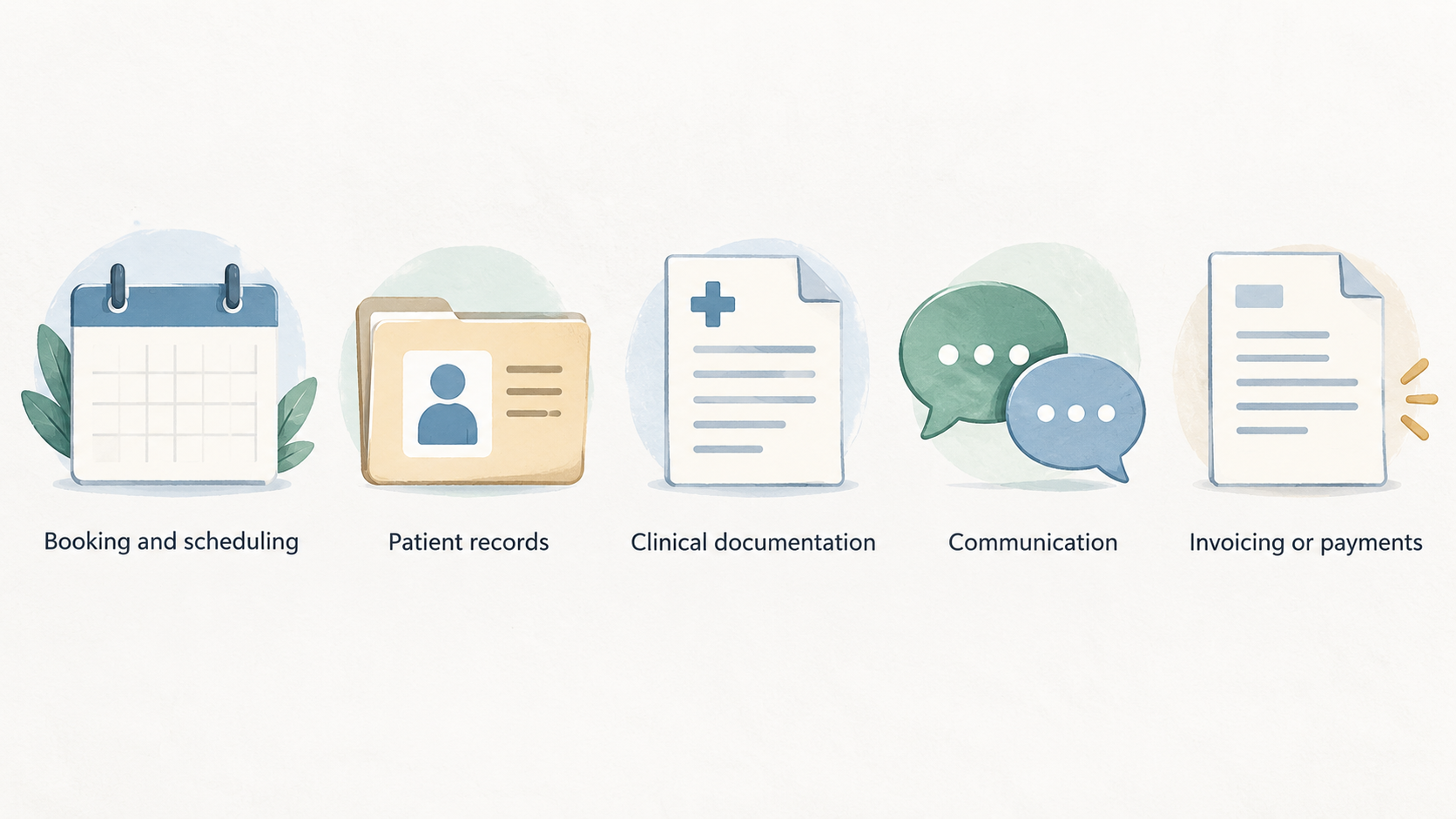
A useful platform should help a clinic run the patient journey consistently: booking and scheduling, patient records, clinical documentation, communication, invoicing or payments, and reporting or operational follow-up. The exact mix matters because private clinics often have both clinical-care and administrative needs to coordinate.
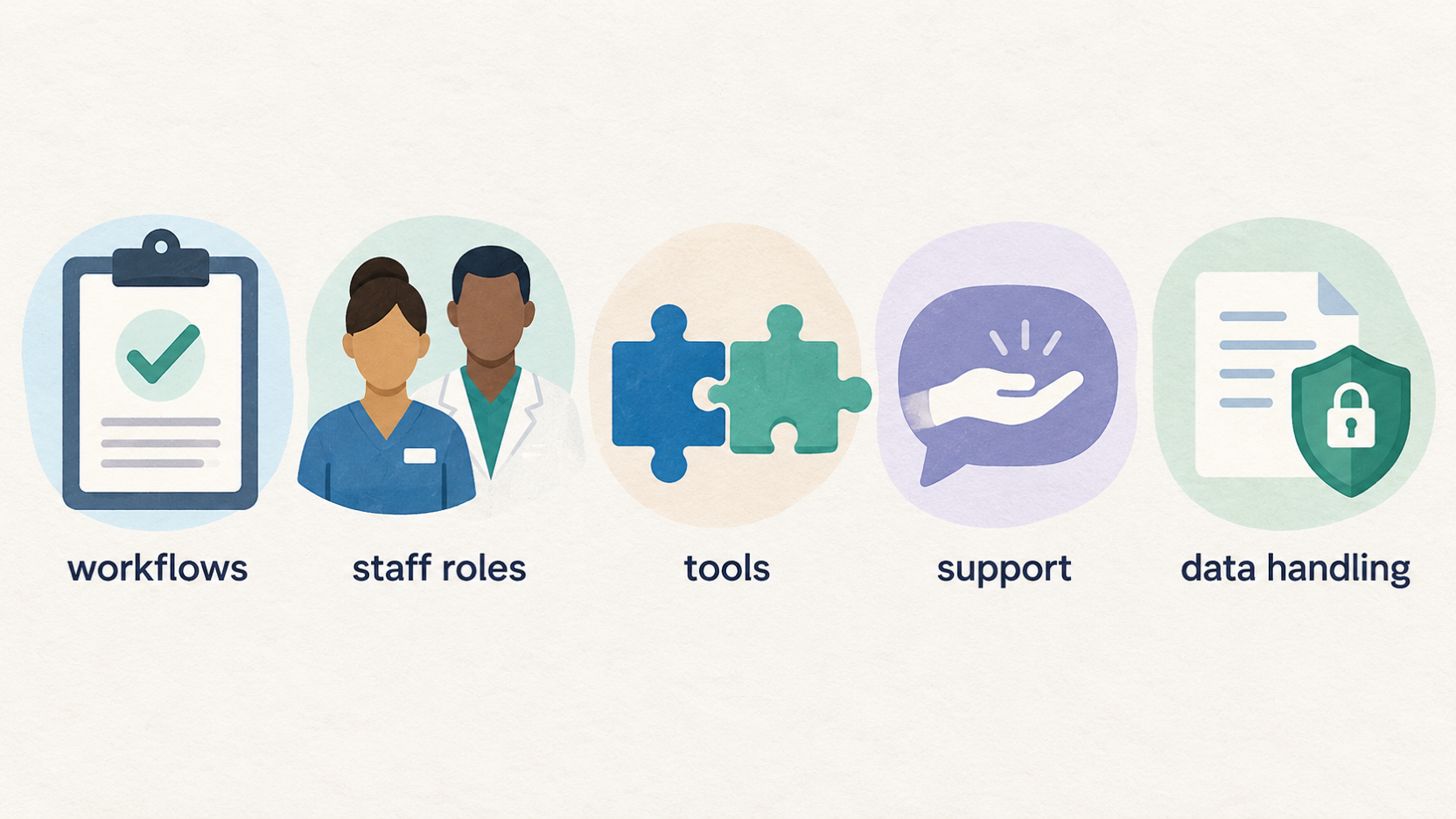
The evaluation should also go beyond feature availability. Ask whether the workflows work for your speciality, whether staff roles can use the system comfortably, how it connects with the tools you already rely on, and what support is included during changeover. For UK-focused due diligence, make specific checks on data handling, UK GDPR responsibilities, security arrangements and any regulatory commitments relevant to your service.
Pricing needs the same discipline. Compare the full commercial model—practitioner or user bands, messaging, payment, onboarding, migration, integrations and support—rather than treating the headline monthly subscription as the total cost.
Cliniko: a straightforward option for smaller practices
AI-generated illustration — not a retailer product photo.
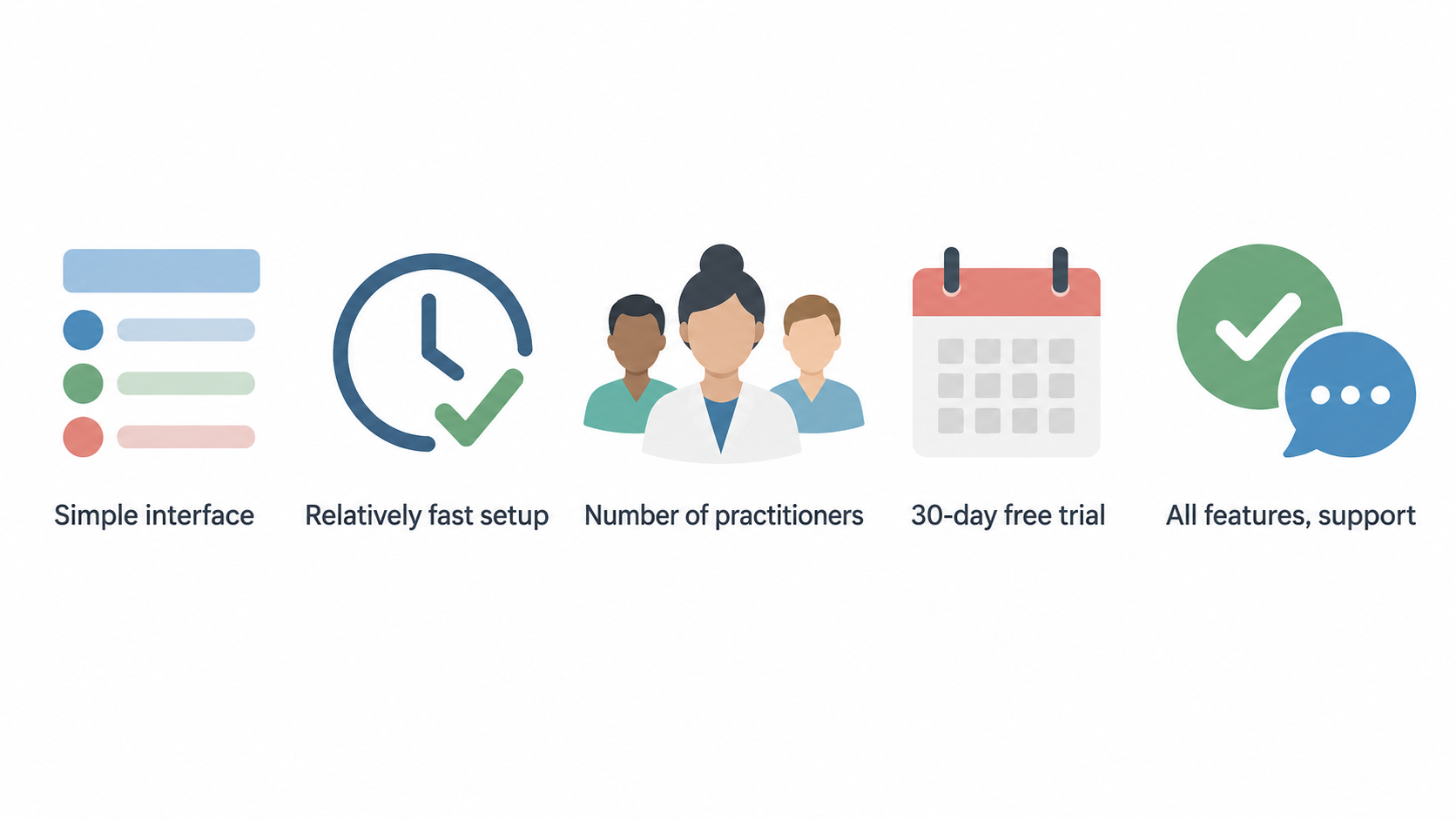
Cliniko is a strong starting point for a solo practitioner or smaller practitioner-led practice that wants to move away from spreadsheets or an informal setup without beginning with a highly complex implementation. Independent editorial coverage describes it as an entry point for solo therapists, citing a simple interface and relatively fast setup.
Its published pricing model is based on the number of practitioners at the clinic, with a 30-day free trial. Cliniko says subscriptions include all features, support, unlimited admin and reception users, unlimited locations, storage and patients, plus monitoring, backups and software updates. That creates a relatively clear basis for comparing a practice’s expected staffing profile against the subscription structure.
However, published prices are shown in US dollars and SMS is separately credited, so a UK clinic should ask for the current applicable commercial terms and calculate likely usage costs. It should also test its own workflows—not assume that a platform popular with allied-health or solo users will fit every speciality, multi-site process or multidisciplinary care pathway.
Semble: broader workflows for multidisciplinary care
Semble is worth considering when a clinic wants a broader connected platform rather than a narrow scheduling-and-records tool. Its platform page describes an integrated EHR for consulting, prescribing and treatment, integrated telehealth, scheduling, workflow automation through Semble Connect, payments, data, integrations, security and compliance support, and data-migration services.
That scope can be relevant for multidisciplinary teams, where the hand-offs between booking, consultation, treatment, billing and operational follow-up are as important as individual features. Independent editorial coverage places Semble with multidisciplinary healthcare teams and broader clinical-pathway support, which makes it a reasonable demo candidate for clinics with complex coordination needs.
The breadth of the stated platform should not be mistaken for proof of fit. During a demo, run a representative cross-team patient journey and ask which integrations, migration services, compliance support and data capabilities are included in the proposed package. Confirm implementation responsibilities, timings and commercial terms directly with Semble.
Pabau and WriteUpp: options for growing clinic operations
Pabau and WriteUpp should be considered when the clinic’s needs have moved beyond a basic single-practitioner setup, but they answer different starting questions.
The independent shortlist positions Pabau for larger private clinics and calls it a full clinic-operations suite. That makes it a candidate where operational scale is a central concern: a larger team, more structured administration or more extensive clinic processes. The available evidence does not establish which specific capabilities, pricing model or implementation approach will suit your clinic, so use the demo to test the workflows that create the most friction today.
WriteUpp is positioned in the same editorial evidence as suitable for solo to mid-size clinics, and separately as a general-healthcare option. Its cited coverage includes scheduling, client records and appointment reminders. This makes it a plausible option for a healthcare practice seeking core workflow support, particularly if those basics map closely to how the team works.
Neither position is a substitute for supplier validation. Ask both vendors to show the same real-world scenarios, clarify current data and support commitments, and provide a like-for-like commercial proposal before deciding.
Limitations and checks before you switch
Software selection carries implementation risk even when the shortlist looks strong. A platform can appear capable on a feature page but still create problems if it does not fit the clinic’s speciality, staff roles, patient-volume pattern or established processes. Migration is especially important: the independent evidence warns that the wrong choice can mean a difficult patient-record transfer, while Semble explicitly promotes migration support.
Turn these uncertainties into demo questions. Ask each supplier to demonstrate your appointment flow, clinical-record process, payment journey and reporting needs using a realistic scenario. Establish which work the clinic must complete before migration, how historic records and files will be handled, what validation is available, and what happens if data needs correction after go-live.
Also request the current contract terms in writing. Verify support coverage, implementation scope, integrations, security and data-protection commitments, pricing variables and exit arrangements. If your service has UK-specific legal or regulatory obligations, seek appropriate professional advice rather than relying on a generic software comparison.
Shortlist: match the platform to your clinic
Use this shortlist as a way to order demos, not as a universal league table.
| Clinic situation | Platform to investigate first | Why it belongs on the shortlist |
|---|---|---|
| Solo or smaller practitioner-led practice seeking a straightforward start | Cliniko | Independent editorial evidence positions it as an entry point for solo practitioners, while its published pricing scales by practitioner count. |
| Multidisciplinary team with connected care and operational workflows | Semble | Semble states coverage across EHR, telehealth, scheduling, workflow connections, payments and data; independent editorial positions it for multidisciplinary teams. |
| Larger private clinic with more extensive operations | Pabau | Independent editorial positions Pabau as a full clinic-operations suite for larger private clinics. |
| Solo to mid-size general-healthcare practice | WriteUpp | Independent editorial coverage positions WriteUpp for general healthcare and solo-to-mid-size clinics. |
Evidence is not sufficient here to declare one platform superior on every feature, price point, speciality or implementation outcome. Score each demo against your own must-haves and keep the comparison consistent across vendors.
How to choose with confidence
Start by mapping the workflows that matter most: enquiry and booking, clinical records, practitioner hand-offs, reminders, billing, follow-up and reporting. Then separate non-negotiables from preferences. A feature that is merely attractive should not outweigh a requirement that affects care delivery, administration or data governance.
Next, ask each supplier to demonstrate the same scenarios with the people who will use the system. Include an edge case such as a reschedule, a multi-practitioner hand-off, a payment query or a record correction. Record what is included, what requires configuration or an integration, and what remains uncertain.
Finally, assess migration and total commercial terms before signing. Get responsibilities, support, data handling, implementation scope and pricing assumptions documented. Verify UK-specific obligations and supplier commitments directly, then choose the platform with the strongest evidence of fit for the clinic you operate today and expect to run next.
Frequently Asked Questions
Is Cliniko suitable for a UK private clinic?
It can be a sensible option for a solo or smaller practitioner-led clinic, especially where a straightforward setup and a practitioner-based subscription model fit the operating model. Cliniko publishes a 30-day trial and states that subscriptions include its features, support and several unlimited user or location allowances. Check current UK commercial terms, SMS costs and workflow fit directly with Cliniko.
Is Semble better suited to multidisciplinary healthcare teams?
Semble is a credible option to assess for multidisciplinary teams because independent editorial coverage positions it that way, and Semble describes a platform spanning EHR, telehealth, scheduling, workflow connections, payments and data. Whether it is better for your team depends on the specific care pathways, integrations, implementation plan and commercial proposal you receive.
What should a UK clinic compare beyond the monthly subscription price?
Compare implementation, migration, messaging or usage charges, integrations, support, contract terms and the staff time needed to adopt the system. Also check whether the platform supports the workflows and data-protection responsibilities that matter to your service. A lower headline subscription can be less valuable if it introduces operational work or a later migration.
How should a clinic assess data migration and compliance before switching software?
Ask each supplier for a documented migration approach covering source data, responsibilities, validation, timing and post-go-live corrections. Request current security, data-handling and support commitments, then assess UK GDPR and any service-specific obligations with appropriate advisers where needed. Do not rely on marketing claims alone for a compliance decision.
Use a consistent demo scorecard to compare your finalists against the workflows your team performs every day.
Sources
Related reading
- Cliniko vs Semble for UK private clinics: workflow, scale, and buying fit
- Cliniko review for UK private practices: strengths, limits, and alternatives
- How to choose practice management software for a UK private clinic
- How to budget for practice management software: total cost of ownership for UK clinics
Editorial information: About our editorial team · Read our editorial policy · Read our affiliate disclosure.